Peptide Certificates of Analysis in Canada — laboratory checklist
How Canadian laboratories review peptide Certificates of Analysis: lot match, HPLC, LC-MS, accession. Research Use Only.
Peptide Certificates of Analysis in Canada — laboratory checklist
Research Use Only. 21+. Not for human or veterinary use.
A Certificate of Analysis (COA) is the core identity document for a research peptide lot. This checklist summarizes how Canadian laboratories review one. It is documentation guidance only and makes no therapeutic claims.
Laboratory checklist
- Laboratory name + accession. Identify the issuing laboratory and the accession or report number; verify it resolves on the laboratory's own record system.
- Name + lot match. The analyte name and lot on the COA should match the vial label and the product SKU.
- HPLC as a sample attribute. Read the HPLC purity figure as a property of the tested sample — not as a fill-quantity statement.
- LC-MS when present. A mass result consistent with the compound's expected molecular mass supports identity confirmation.
- Archive the PDF with the product URL. Keep the COA file alongside the product page link so lot records stay traceable.
Related documentation
- Certificates of Analysis
- How to read a peptide COA
- How to read a Janoshik peptide COA
- Freedom Diagnostics peptide COAs (Canada)
- Research peptides in Canada
Research Use Only documentation. No therapeutic claims. Not for human or veterinary use.
Key takeaways
| Question | Short answer | Source |
|---|---|---|
| What is a peptide COA? | The identity and purity document for one tested lot of a research peptide | Analytical practice |
| First check | The lot or batch on the certificate matches the vial label | Lot matching |
| Core results | Purity by HPLC, identity by mass spectrometry, and the method used | ICH Q2(R2) |
| Verify where? | With the issuing laboratory, using the report or accession number | Janoshik verification |
| Hermetica library | 7 published certificates from Janoshik Analytical and Freedom Diagnostics | COA library |
Catalogue and shipping
Research Use Only. 21+. Not for human or veterinary use.
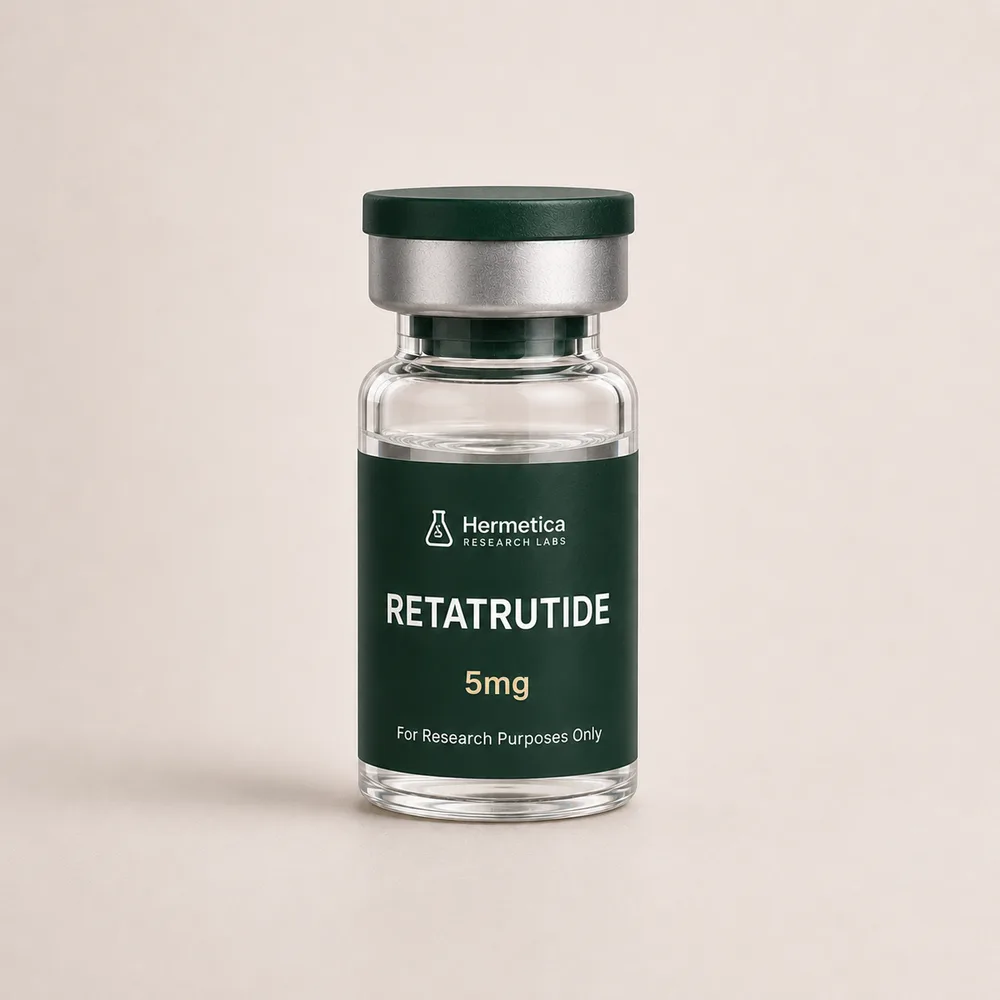
- Retatrutide 5mg (RUO)
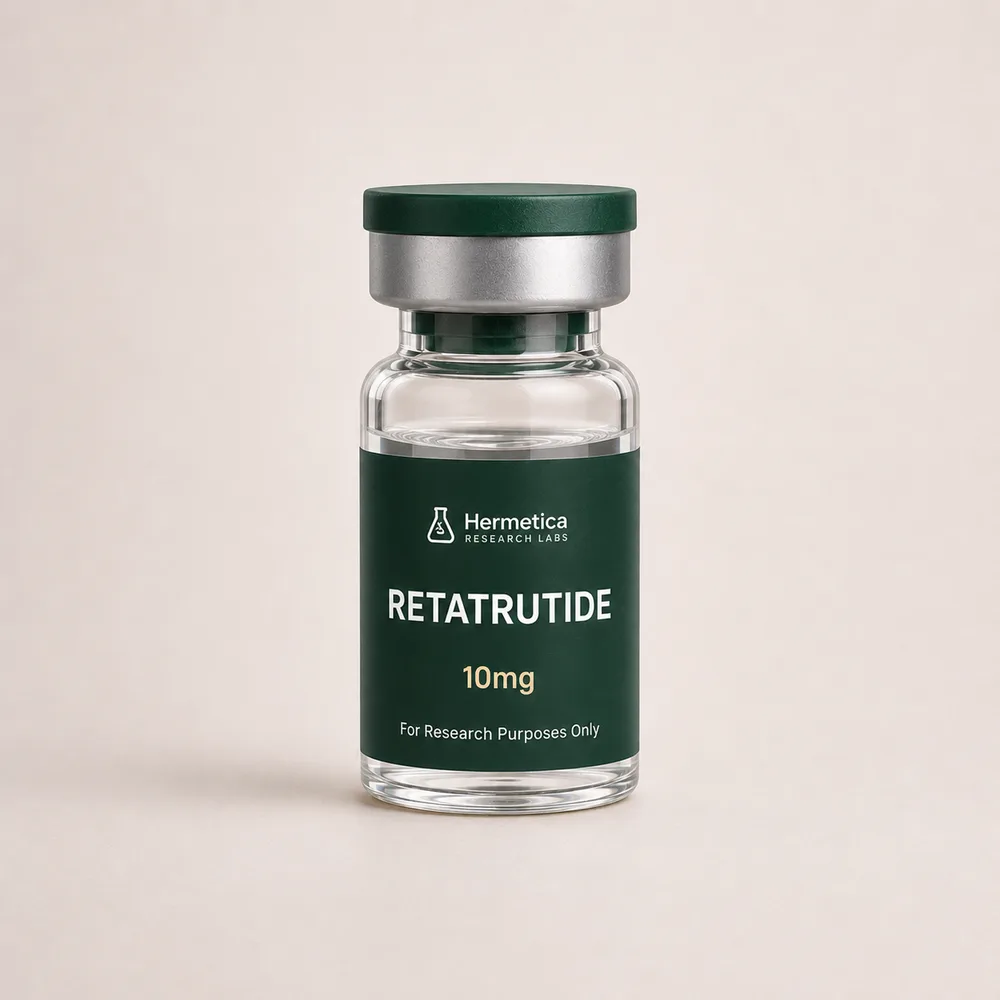
- Retatrutide 10mg (RUO)
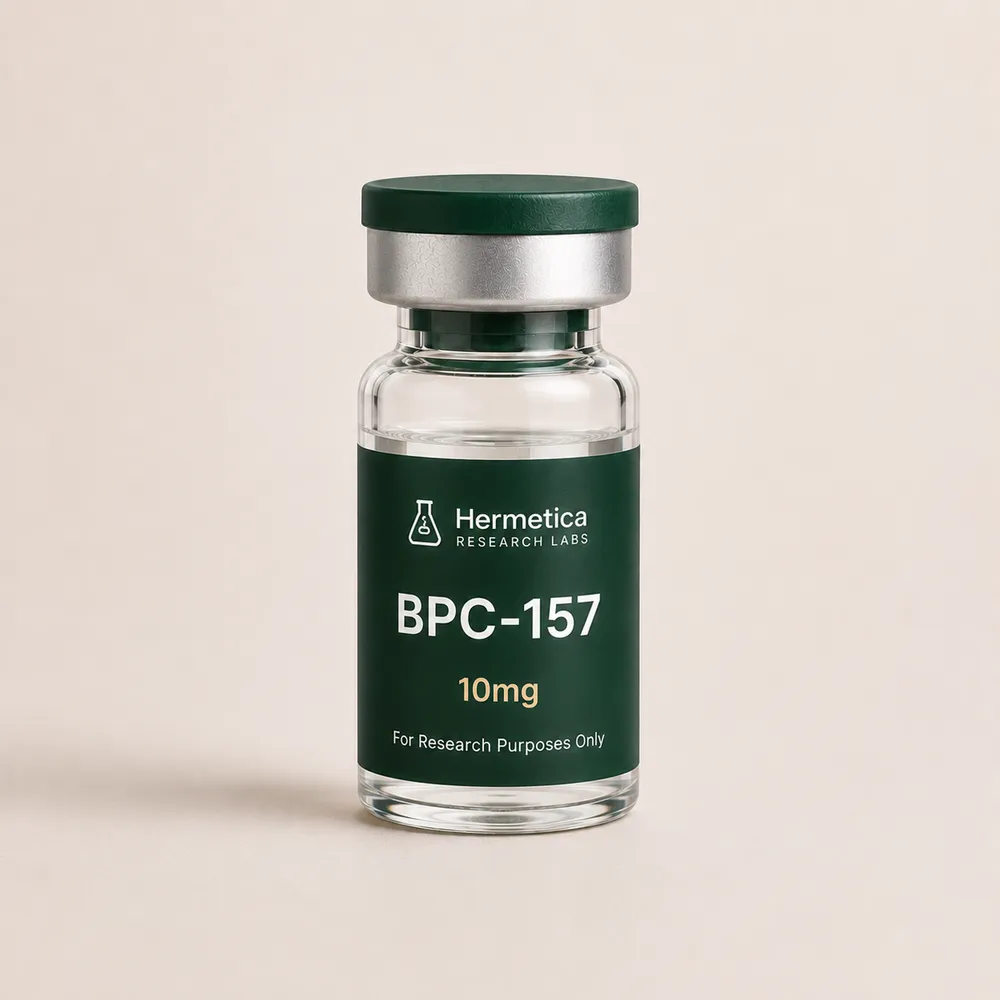
- BPC-157 10mg (RUO)
- Full RUO catalogue
- Certificates of Analysis
- Shipping policy
Shipping within Canada: flat $15 CAD, free on orders of $150 or more. Typical transit is 5 to 12 business days in discreet packaging. Prices are in CAD.
Frequently asked questions
What should a peptide COA in Canada show?
The compound name, the lot or batch tested, the issuing laboratory and report number, the test date, the method, and results for purity and identity. Any lab in Canada reviewing a research peptide should expect all of these.
How do I verify a peptide COA?
Use the report or accession number printed on the certificate and confirm it with the issuing laboratory directly. Then match the lot on the report to the lot on your vial.
Does a COA prove what is in my vial?
Only for the lot that was tested. If the batch number on your vial differs from the certificate, the certificate does not describe your material.
Where are Hermetica's COAs published?
On the Certificates of Analysis page, which lists 7 certificates from Janoshik Analytical and Freedom Diagnostics by product, lot and accession number.
References
- D'Hondt M, Bracke N, Taevernier L, Gevaert B, Verbeke F, Wynendaele E, De Spiegeleer B. (2014). Related impurities in peptide medicines. Journal of Pharmaceutical and Biomedical Analysis, 101, 2–30. doi:10.1016/j.jpba.2014.06.012
- International Council for Harmonisation. (2023). ICH Q2(R2) Guideline on validation of analytical procedures, Step 5 (EMA/CHMP/ICH/82072/2006). ema.europa.eu (PDF)
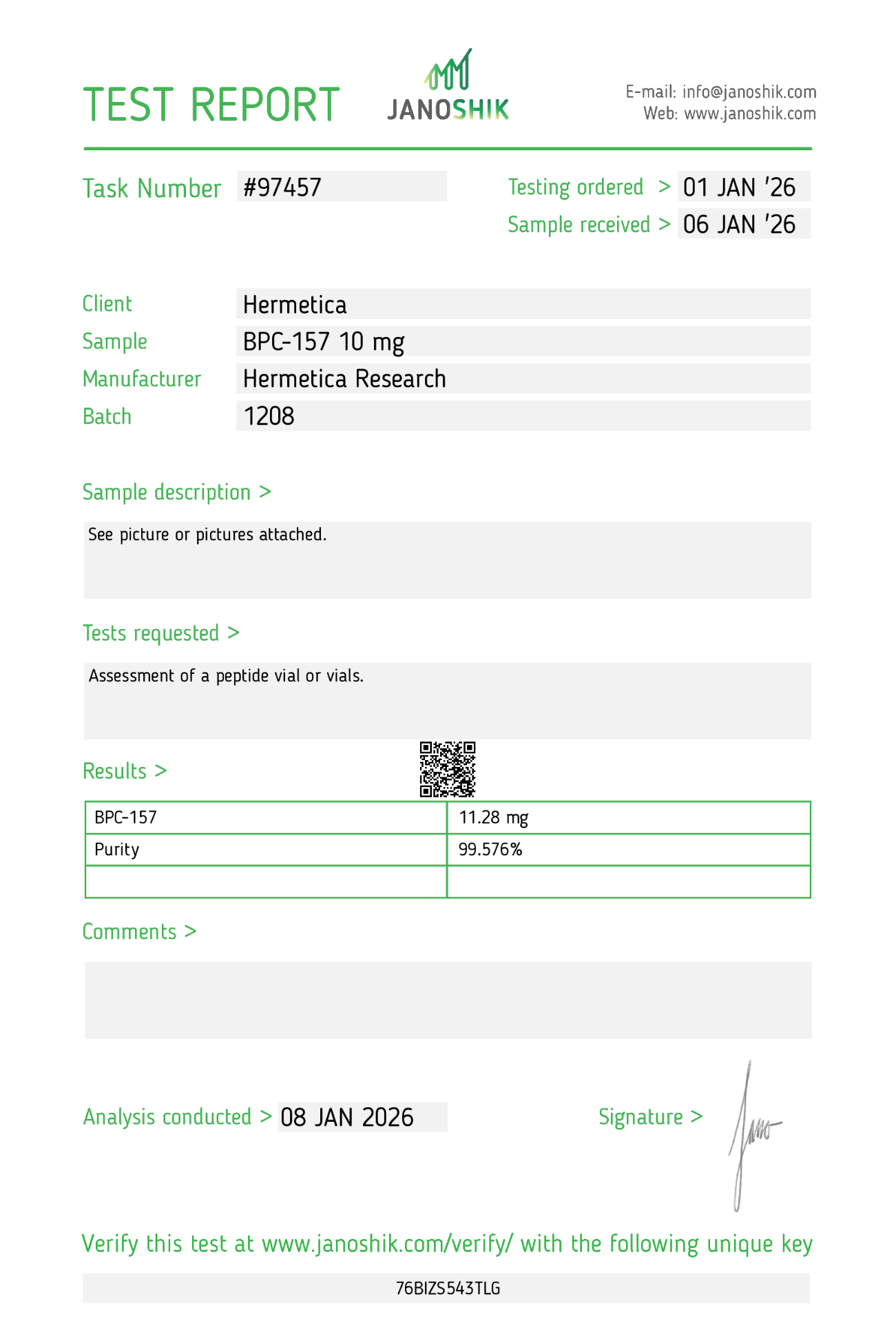
- Janoshik Analytical. Test Report #97457, BPC-157 10 mg, Batch 1208; analysis conducted 8 January 2026. Certificate image published by Hermetica Research Labs. View certificate
Research Use Only. Not for human or veterinary use. Purchasers must be 21 or older.
All content is provided for informational purposes for qualified researchers working with research materials in a laboratory setting. Products supplied by Hermetica Research Labs are sold strictly for in-vitro research. They are not intended for human or veterinary use, and nothing on this page constitutes medical, health, or dosing guidance. Must be 21+ to purchase.
Order RUO research materials
Flat $15 shipping across Canada · Free on orders of $150 or more · Canada only · 21+ · Research Use Only, not for human or veterinary use.
Related research peptides
Related research
- Retatrutide for Laboratory Research (Canada): What a COA Should Show
A documentation checklist for Canadian researchers reviewing Retatrutide Certificates of Analysis — identity, purity, lot matching, and independent lab verification. Research Use Only.
- How to Get Research Peptides in Canada: Supplier, COA and Receiving Checklist (RUO)
Five steps Canadian laboratories use to source Research Use Only peptides: domestic shipping, a lot-matched third-party COA, independent test lookup and a receiving record.
- Buy Epitalon in Canada — Epitalon 10mg Research Peptide (RUO)
Buying Epitalon in Canada for laboratory research: the 10mg tetrapeptide vial, its identity fields, the current certificate status and Canada-only shipping. RUO, 21+.