How to Verify a Freedom Diagnostics Peptide COA
A step-by-step guide to checking a Freedom Diagnostics certificate at the source: accession lookup, HPLC vs LC-MS, and matching the lot on your vial to the report. Research Use Only.
A Certificate of Analysis is only as useful as your ability to confirm it is genuine and that it describes the material in your hands. This article walks through verifying a Freedom Diagnostics peptide report end to end: how the laboratory's lookup works, which analytical methods the report reflects, how the accession verification steps run, and how a specific Hermetica lot maps to its certificate. It is a documentation guide for qualified researchers, not a product use guide.
Who Freedom Diagnostics is
Freedom Diagnostics is an independent analytical laboratory offering peptide identity and purity testing. Like Janoshik Analytical — covered in our companion article — it is a contract service: a client submits a physical sample, the lab runs a defined set of analyses, and it issues a report tied to that sample. The laboratory is paid for the analysis, not for a favourable outcome, which is what distinguishes a third-party report from an in-house claim.
What the report measures: HPLC vs LC-MS
Freedom Diagnostics peptide reports typically rest on two complementary methods, and they answer different questions:
| Method | Question it answers | Principal limitation |
|---|---|---|
| HPLC purity quantification | What proportion of the UV-detectable material is the target peptide? | Area-percent; non-UV-absorbing species such as salts and residual water are largely invisible |
| LC-MS / mass spectrometry | Is the molecule present the one named on the label? | Confirms identity and mass, not the absolute quantity in the vial |
A high HPLC purity figure does not by itself establish net content, and an LC-MS identity match does not establish purity. Read both sections of the report; our guide to reading a peptide COA covers the field-by-field detail.
Accession verification: the steps
Each Freedom Diagnostics report carries a unique accession / report number. Verification happens at the laboratory, not on the vendor's website:
- Read the accession number and analysis date from the certificate itself — not from a vendor's description of it.
- Contact Freedom Diagnostics through its official channels and quote the accession number, or use any lookup facility the laboratory publishes, to confirm the record exists.
- Compare every field: compound name, reported purity, sample identifier, and date. Any mismatch between the laboratory's record and the PDF is disqualifying.
- Confirm the sample identifier on the report corresponds to the lot number printed on the vial you received. A verified report for a different batch tells you nothing about your material.
The last step is where most verification chains break. Batch-level correspondence is the entire point of the exercise.
A worked example: GHK-Cu lot M26S012
Our GHK-Cu 50mg lot M26S012 was submitted to Freedom Diagnostics, and the resulting certificate is issued under COA #2604070134. The mapping is deliberately simple:
- Vial label carries lot M26S012.
- Certificate COA #2604070134 names that lot as the sample identifier, and reports the compound identity and HPLC purity for that specific sample.
- Verification of accession 2604070134 with Freedom Diagnostics confirms the record independently of anything published on this site.
The certificate is published in full in our COA library alongside the Janoshik Analytical reports covering other catalogue lots, including those reviewed under analyst attributions such as D'Hondt and Hoofnagle where those citations appear on the underlying documentation.
What a Freedom Diagnostics report does not tell you
- It describes one sample at one point in time. It carries no information about storage, transit temperature, or handling after the sample was drawn.
- It says nothing about batches never submitted. Absence of a bad report is not evidence of consistency.
- It is not a quality system. A report is a measurement; traceability, lot control, and cold chain are separate disciplines.
Research use only. All materials described here are supplied strictly for in-vitro laboratory research and analytical use. They are not drugs, foods, cosmetics, or medical devices, are not approved by Health Canada for any therapeutic purpose, and are not intended for human or veterinary consumption or administration. Purchasers must be 21+. Nothing in this article constitutes medical, clinical, or regulatory advice.
The certificates referenced here are published in full, with accession numbers and lot identifiers intact, in the COA library. Lot-matched documentation sits on each product page, including GHK-Cu 50mg.
All content is provided for informational purposes for qualified researchers working with research materials in a laboratory setting. Products supplied by Hermetica Research Labs are sold strictly for in-vitro research. They are not intended for human or veterinary use, and nothing on this page constitutes medical, health, or dosing guidance. Must be 21+ to purchase.
Related research peptides
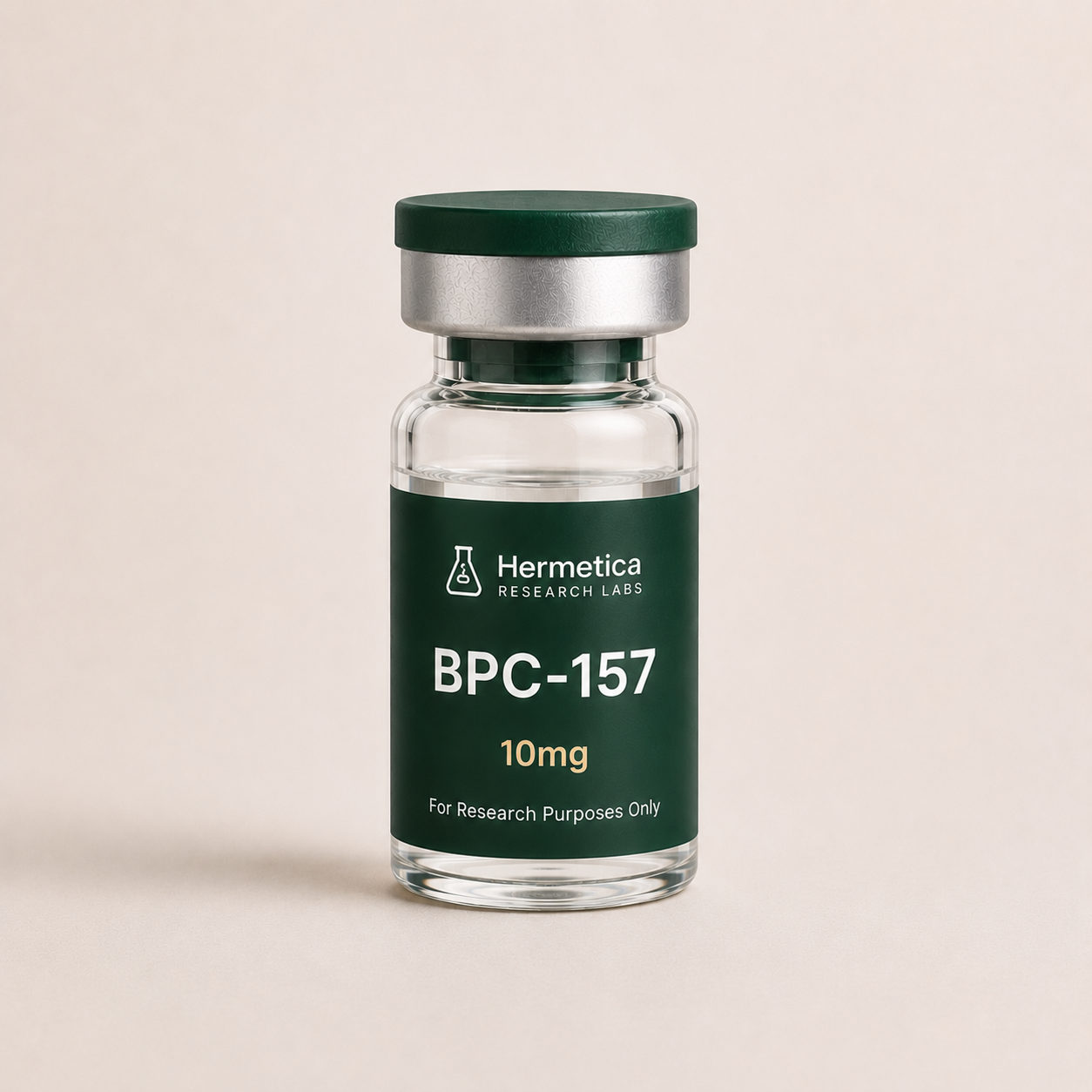
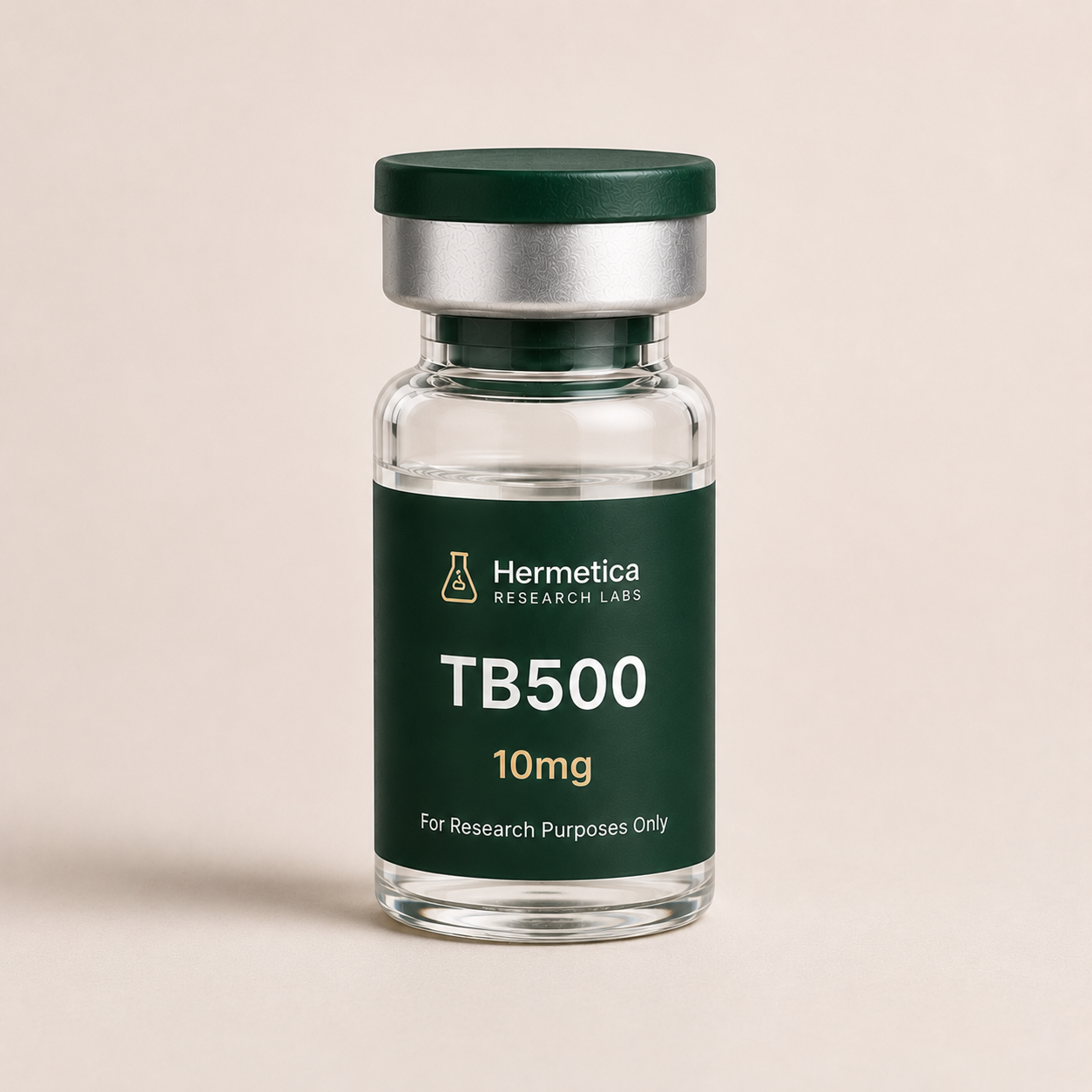
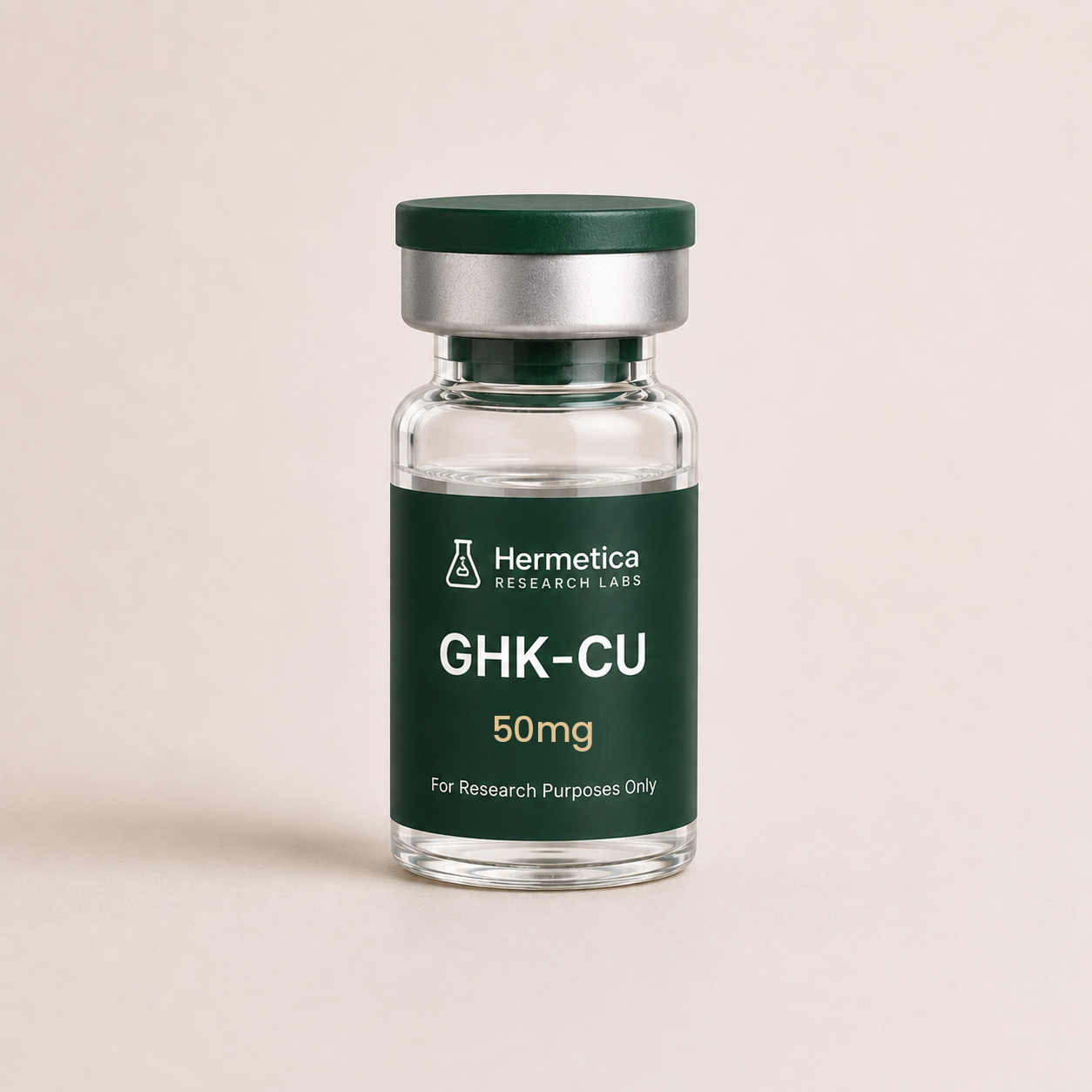
Related research
- GHK-Cu research peptide — Freedom Diagnostics COA notes (Canada)
How to review GHK-Cu lot documentation and independently verify a Freedom Diagnostics certificate. Research Use Only.
- Freedom Diagnostics peptide COAs for Canadian laboratory documentation
How Canadian labs use Freedom Diagnostics COAs with Hermetica lots — accession, lot match, HPLC/LC-MS. Research Use Only.
- How to Buy Research Peptides in Canada: A Compliance-First Checklist
A step-by-step checklist for researchers preparing to buy research peptides in Canada, covering domestic sourcing, documentation, and batch-level verification.