How to Buy Research Peptides in Canada: A Compliance-First Checklist
A step-by-step checklist for researchers preparing to buy research peptides in Canada, covering domestic sourcing, documentation, and batch-level verification.
How to Buy Research Peptides in Canada: A Compliance-First Checklist
Researchers who want to buy research peptides in Canada are usually solving two problems at once: finding a supplier whose material is verifiably what the label says, and doing so without the customs delay and documentation gaps that come with an offshore order. This checklist sets out what to check before placing an order, roughly in the order a lab would reasonably check it.
Where to Buy Research Peptides in Canada
A domestic Canadian supplier ships inside Canada, which removes the Canada Border Services Agency inspection queue from the timeline and keeps invoicing, sale, and shipping in one jurisdiction. That matters for a lab running a scheduled protocol, where an unpredictable customs hold is a real cost. Our earlier overview, Research Peptides in Canada: What Researchers Should Know Before Buying, covers the domestic-sourcing case in more detail.
Offshore listings are frequently cheaper on paper, but the total cost of an order includes the risk of a held parcel, the absence of a Canadian point of contact, and — in many cases — the absence of any batch-specific documentation at all.
Verify Before You Order
Before comparing prices, compare documentation. The table below is the minimum a supplier should be able to produce for any listed compound.
| Check | What it confirms | Where to find it |
|---|---|---|
| Third-party Certificate of Analysis | An independent lab, not the supplier, confirms identity and purity for the specific lot | Supplier's COA library |
| Lot number on vial matches COA | The report corresponds to the vial shipped, not a generic reference sample | Product packaging vs. COA header |
| HPLC purity data with chromatogram | Purity is measured, not asserted | COA document |
| Mass spectrometry identity confirmation | The compound is what the label claims | COA document |
| Consistent RUO labelling | Vial, invoice, and product page describe the same reagent-only status | Packaging, invoice, product page |
If any of these is missing, the listing is not verifiable — see our guide on How to Vet a Research Peptide Supplier in Canada for the full evaluation process.
What "Third-Party Tested" Should Actually Mean
The phrase "third-party tested" gets used loosely. It should mean an independent analytical laboratory issued a report against a specific lot — not that the supplier ran an internal check and described it that way. Our breakdown, Third-Party Tested Peptides: What the Claim Actually Means, goes through the distinction in more detail.
Not every listed compound carries a certificate. Some research compounds are sold without published third-party data, and a buyer should regard "no certificate published" as its own data point rather than assume equivalence with certified lots.
Product-Level Verification
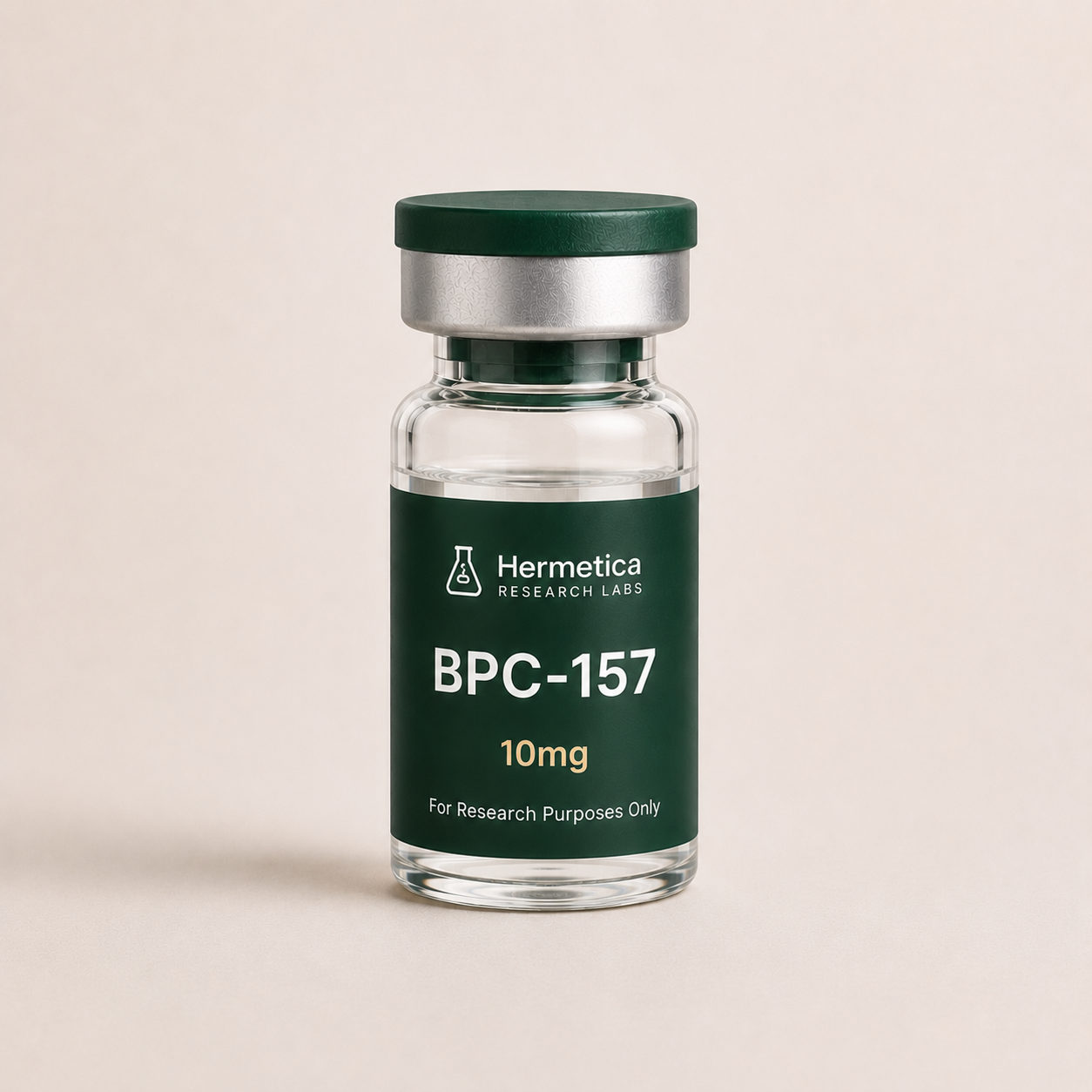
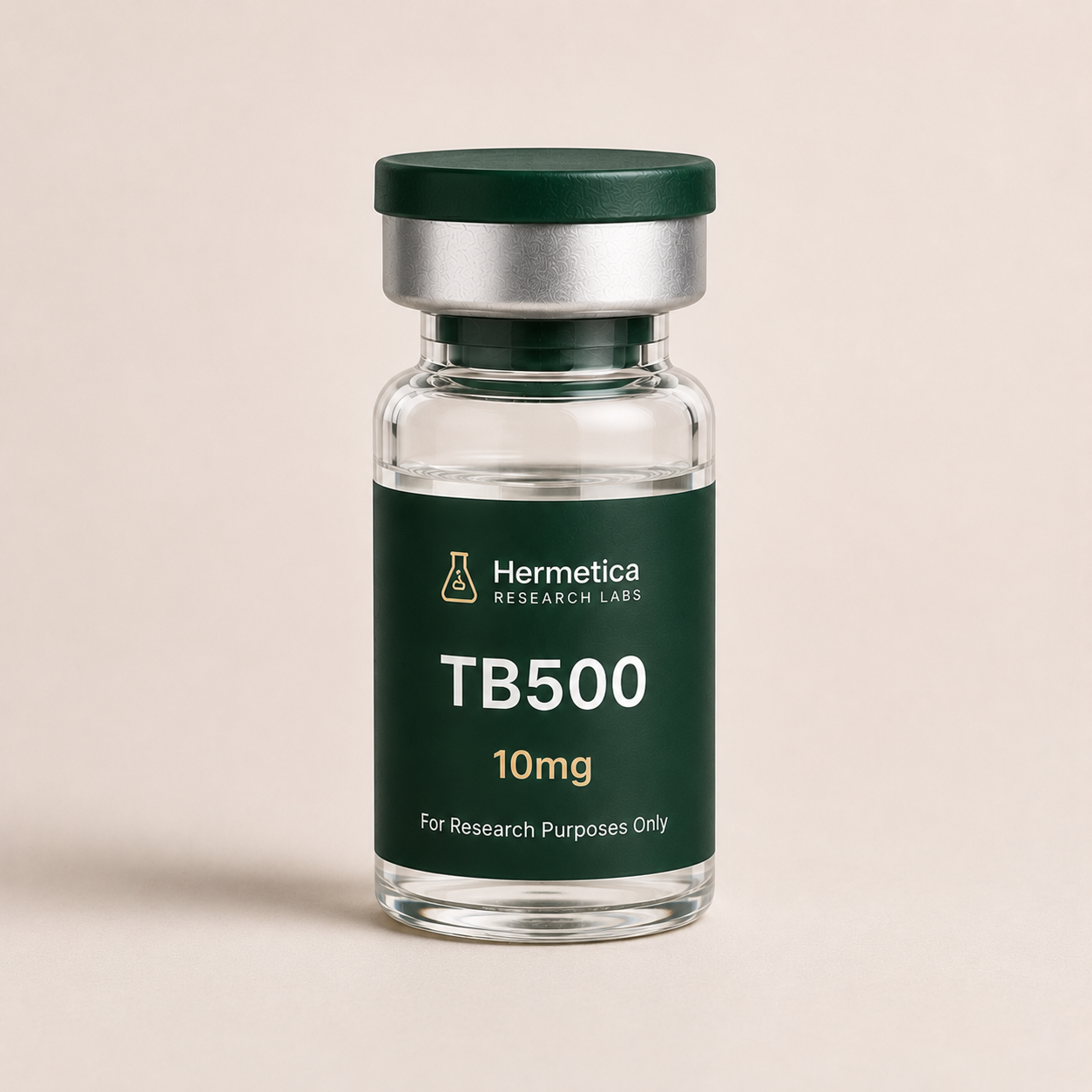
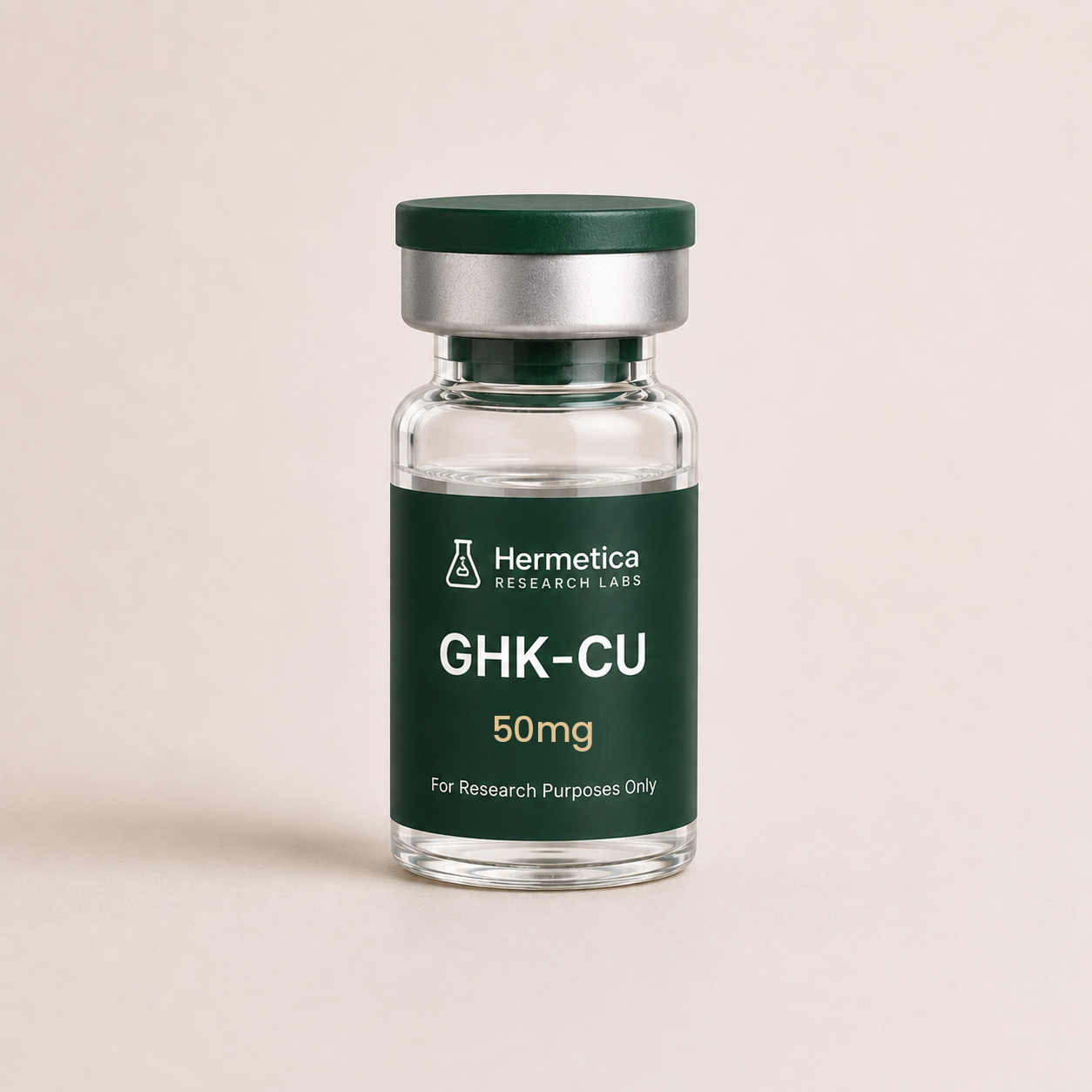
Hermetica publishes a lot-linked report for every certified compound. BPC-157 and TB-500 each list a batch number tied to a Janoshik or Freedom Diagnostics report; GHK-Cu is documented the same way, with purity and identity data specific to the listed molecular weight.
Not every SKU in a research catalogue carries the same documentation tier. Compounds sold without a published certificate should be flagged as such on the product page — if a listing is silent on testing status, ask before ordering rather than assuming parity with certified lots.
A Practical Ordering Checklist
Before checkout, a researcher should be able to answer:
- Does the supplier ship from within Canada?
- Is there a lot-specific COA, and does the lot number match the vial?
- Does the COA include both HPLC purity and mass spectrometry identity data?
- Is RUO labelling consistent across the vial, invoice, and product page?
- Is age verification and an RUO acknowledgement part of checkout?
If any answer is no, the order is a guess rather than a documented purchase.
Research Use Only. All compounds referenced are laboratory reagents intended for in-vitro research applications and are not approved by Health Canada for human or veterinary use, diagnosis, or any condition. Nothing in this article constitutes guidance on administration or use outside a licensed laboratory setting.
All content is provided for informational purposes for qualified researchers working with research materials in a laboratory setting. Products supplied by Hermetica Research Labs are sold strictly for in-vitro research. They are not intended for human or veterinary use, and nothing on this page constitutes medical, health, or dosing guidance. Must be 21+ to purchase.
Related research peptides
Related research
- Domestic Peptide Shipping in Canada: Customs, Transit Time, and What to Verify
Ordering research peptides from overseas adds a variable most labs underestimate: the border. What happens to an international parcel at Canadian customs, why transit time matters for lyophilized material, and the four things to verify before ordering from any supplier claiming to ship domestically.
- Research Peptides in Canada: What Researchers Should Know Before Buying
A practical guide for Canadian researchers on domestic sourcing of research peptides, what Research Use Only means, and how to evaluate a supplier before purchasing.
- How to Vet a Research Peptide Supplier in Canada
Catalogue claims across the Canadian market are close to interchangeable, which makes them useless for comparison. This guide covers the checks that produce a verifiable answer — batch-specific analytical reports, lot traceability, and where inventory physically sits.