Third-Party Tested Peptides: What the Claim Actually Means
"Third-party tested" is not a defined term, and the same phrase covers arrangements with very different evidential value. This guide sets out the four fields that make a peptide COA checkable, and the order in which to read them.
Almost every listing in this market carries the phrase somewhere on the page. Third-party tested peptides sounds like a specification, but it is not a defined term, and nothing about it is standardised. It can describe a genuinely independent analysis of the exact lot in the vial, or it can describe a report someone else commissioned, for a different batch, two years ago. The phrase alone does not distinguish between those two situations. This article sets out what has to be true underneath the claim before it carries any weight, and the specific checks that separate the two.
Three arrangements that all get called "third-party tested"
The label is applied to arrangements with very different evidential value.
| Arrangement | Who commissioned the test | What it establishes |
|---|---|---|
| In-house QC | The manufacturer | The manufacturer's own measurement of its own material. Not third-party testing, whatever the document looks like. |
| Supplier-commissioned independent lab | The vendor or manufacturer, sent to a contract laboratory | An independent measurement, provided the sample was drawn from the lot being sold |
| Anonymous or buyer-submitted testing | A buyer or a community programme, submitted without vendor involvement | An independent measurement with the sampling step also outside vendor control |
The second arrangement is the industry norm and is reasonable, but it has a structural weak point: the supplier chose which vial to send. That is not a reason to dismiss the report. It is a reason to check the details that make substitution visible.
The chain-of-custody question
A certificate of analysis describes a sample, not a product line. The value of the document depends entirely on whether the sample and the vial on your bench came from the same lot.
That link is made by a lot number, and it is the single most useful thing on the page. If the lot identifier printed on the vial or packing slip appears on the analytical report, the report is about your material. If the report carries no lot identifier, or the identifier does not match, the document is a marketing asset rather than evidence — regardless of how high the purity figure is.
What a report has to name to be checkable
Four fields make a report verifiable independently of the vendor's website:
- The issuing laboratory and report number. Independent laboratories such as Janoshik Analytical and Freedom Diagnostics issue under their own letterhead with a traceable report number. A cropped image with no letterhead cannot be checked against anything.
- The lot or batch identifier, matching the physical material.
- The report date, which should postdate the manufacture date and sit within the period a supplier claims the lot has been in stock.
- The analytical method, stated explicitly — reversed-phase HPLC, LC-MS, or a quantity determination. "Purity: 99%" with no method named is a number without a question attached to it.
We publish full certificates rather than summaries for exactly this reason; the batch reports are on the COA library.
Which analyses the claim should actually cover
Purity and identity are separate measurements and answer separate questions. A vendor can supply one and imply the other.
| Analysis | Question answered | What it does not tell you |
|---|---|---|
| Reversed-phase HPLC | What proportion of UV-detectable material is the target peak? | Nothing about salts, residual solvent, or water; nothing about which molecule the peak is |
| LC-MS / mass spectrometry | Is the molecule present the one named on the label? | Nothing about how much is in the vial |
| Peptide content / quantity | How much peptide is in the vial versus the labelled mass? | Nothing about impurity profile |
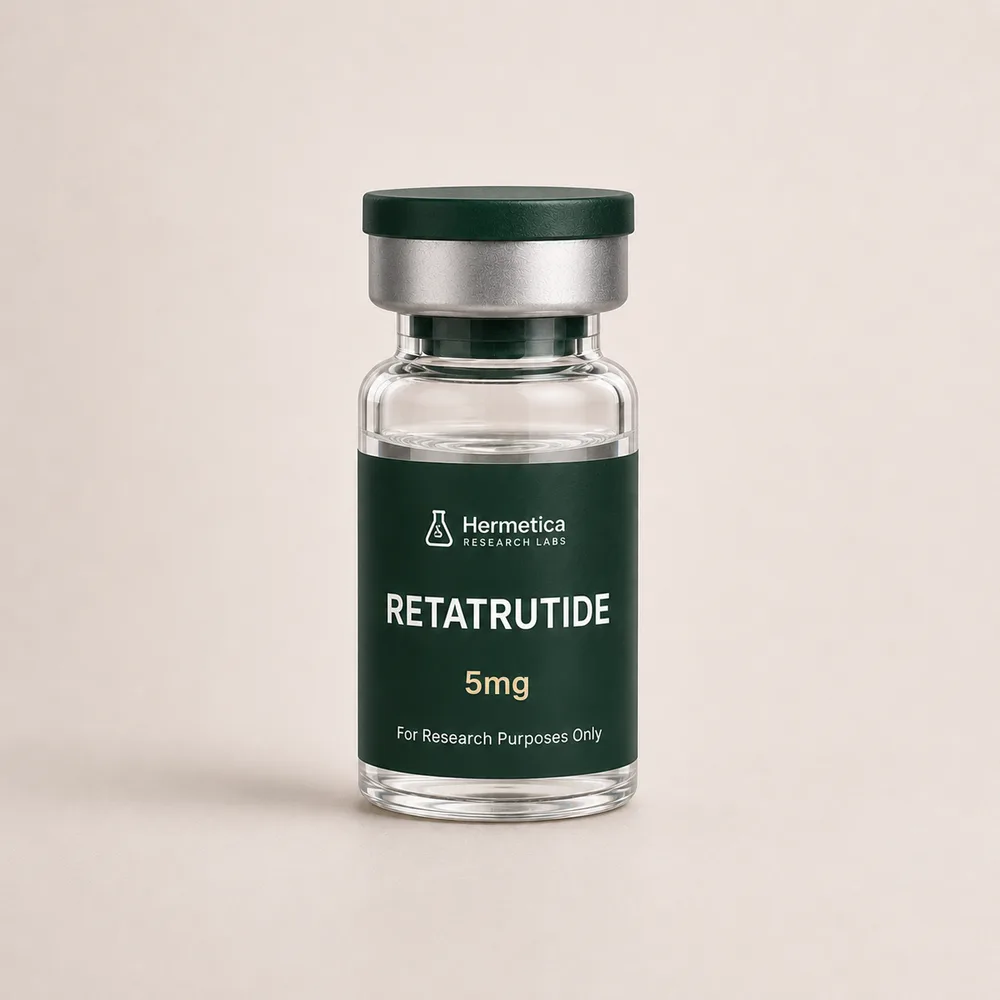
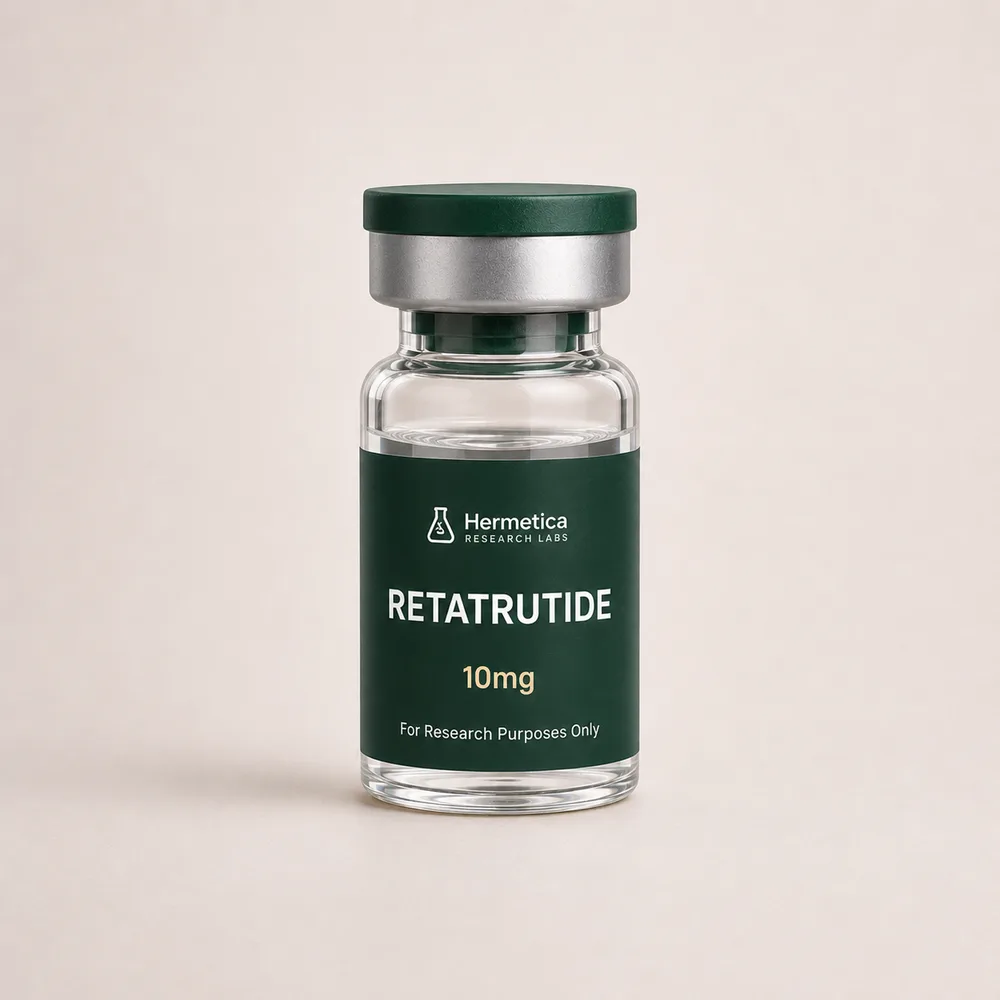
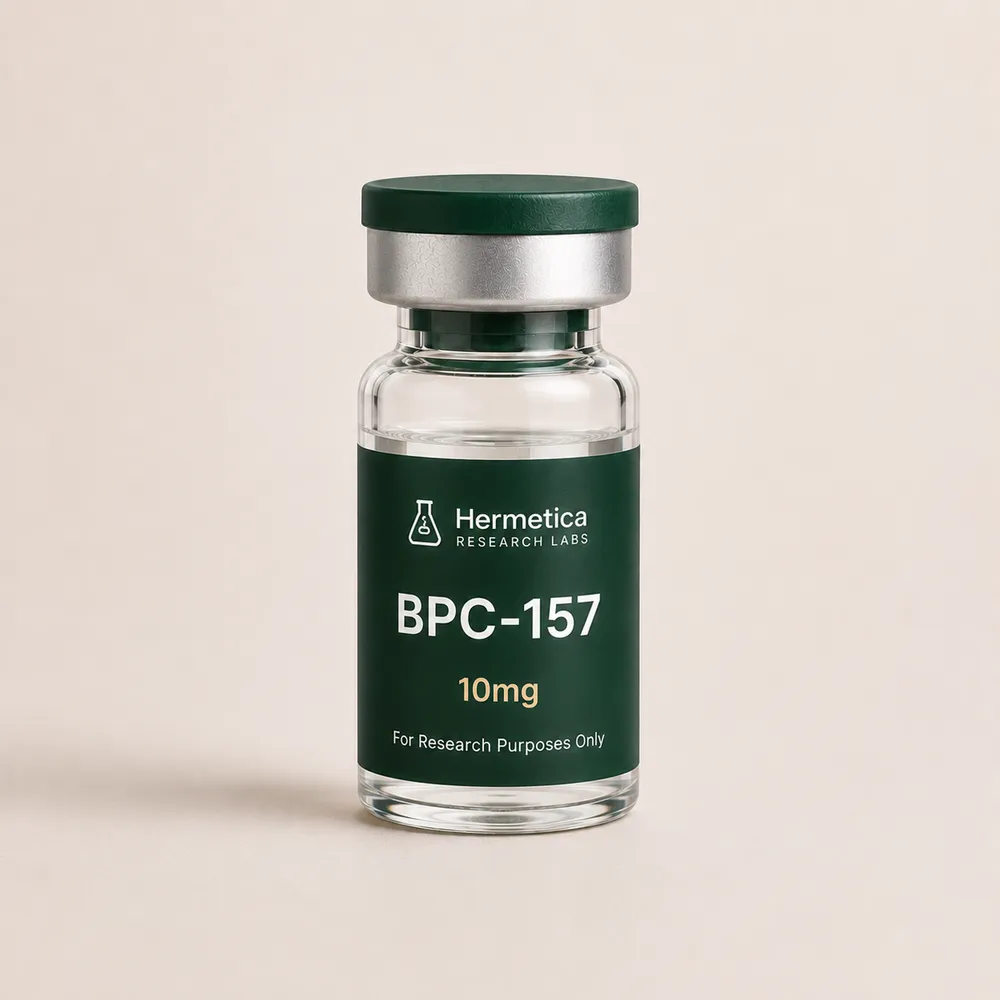
A lyophilised vial can show a 99 percent HPLC result and still contain substantially less peptide than the label states, because area-percent purity is a ratio within the detected material, not a mass. Purity and content are both worth having on file. This applies as much to widely stocked sequences such as BPC-157 and GHK-Cu as it does to newer and structurally more complex compounds like retatrutide, where identity confirmation carries proportionally more weight.
Where the claim quietly fails
Four recurring patterns account for most of the gap between the phrase and the reality:
- The specimen certificate. A real report, real laboratory, real compound — generated for a batch that shipped long ago and left on the page ever since.
- One report, many lots. A single analysis presented across successive production runs with the lot field ignored.
- Purity substituted for identity. An HPLC chromatogram shown alone, with the identity question left unanswered.
- The unverifiable image. A screenshot cropped to the purity figure, letterhead and report number removed.
None of these require bad intent to occur. All of them are visible in under a minute if you look for the lot number and the issuing lab first, and read the purity figure last.
A practical sequence
Read the lot identifier on the vial. Find it on the report. Confirm the issuing laboratory and report number are legible and belong to an independent lab. Check the report date. Then, and only then, read the numbers. If any of the first four steps fails, the numbers are not describing your material and there is no need to evaluate them.
Research use only. All materials supplied by Hermetica Research Labs are intended strictly for in-vitro laboratory research and analytical use by qualified personnel. They are not drugs, foods, cosmetics, or medical devices, are not approved by Health Canada for any therapeutic purpose, and are not for human or veterinary use, diagnostic use, or administration of any kind. This article is provided as general reference information about analytical documentation and does not constitute medical, regulatory, or professional advice.
All content is provided for informational purposes for qualified researchers working with research materials in a laboratory setting. Products supplied by Hermetica Research Labs are sold strictly for in-vitro research. They are not intended for human or veterinary use, and nothing on this page constitutes medical, health, or dosing guidance. Must be 21+ to purchase.
Order RUO research materials
Flat $15 shipping across Canada · Free on orders of $150 or more · Canada only · 21+ · Research Use Only, not for human or veterinary use.
Related research peptides
Related research
- Third-party tested peptides in Canada — documentation meaning
What third-party testing establishes on a Canadian research peptide certificate — and what it does not.
- How to Read a Peptide Certificate of Analysis
A researcher's guide to reading a peptide COA: HPLC vs mass spectrometry, what a purity percentage actually measures, batch and lot numbers, and the red flags that separate a real third-party report from a decorative one.
- MOTS-c Canada — RUO lab sourcing and COA notes
How Canadian laboratories document MOTS-c identity and lot-matched third-party Certificates of Analysis. Research Use Only — not for human or veterinary use.