Janoshik Analytical Explained: How Third-Party Peptide Reports Are Verified
Janoshik Analytical explained for researchers: who the laboratory is, which analyses it runs, how to verify a certificate at the issuing lab rather than on a vendor site, and the questions a Janoshik report cannot answer.
Most research peptide vendors now attach a lab report to their listings, and a large share of those reports carry the same letterhead. This article is Janoshik Analytical explained for the working researcher: who the laboratory is, which analytical methods it actually runs, how an individual report can be checked against the issuing lab rather than against the vendor's website, and — just as importantly — the questions a Janoshik report does not answer.
Who Janoshik Analytical is
Janoshik Analytical is an independent analytical laboratory based in the Czech Republic. It is a contract testing service: a client sends in a physical sample, the lab runs a defined set of analyses, and the lab issues a report. Its client base spans research chemical suppliers, community testing programmes, and individual buyers submitting samples anonymously.
The relevant structural fact is that Janoshik has no commercial interest in the outcome. It is paid for the analysis, not for a favourable result. That independence is what separates a third-party report from an in-house claim, and it is the reason we publish the underlying certificates rather than summarising them.
Independence is not the same thing as accreditation. ISO/IEC 17025 accreditation is a formal, audited scope covering specific methods, and researchers who require accredited data for a regulated workflow should confirm a laboratory's current accreditation status directly with that laboratory rather than inferring it from the presence of a report.
What the laboratory actually measures
Janoshik's peptide services cluster around a few analyses. Each answers a narrow, specific question.
| Analysis | Question it answers | Principal limitation |
|---|---|---|
| HPLC purity quantification | What proportion of the UV-detectable material is the target peptide? | Area-percent; non-UV-absorbing species such as salts and residual water are largely invisible |
| LC-MS / mass spectrometry | Is the molecule present the one named on the label? | Confirms identity and mass, not the quantity in the vial |
| Peptide quantity / content | How much peptide is in the vial versus the labelled amount? | Requires the specific quantitative service; not implied by a purity figure alone |
| Full vial assessment | Adds sterility and endotoxin-type checks to the above | Applies only to the vial submitted, not the whole batch |
Why purity and quantity are separate questions
A vial can return a high purity figure and still contain less material than the label states. Purity is a ratio describing the composition of whatever is in the vial; quantity is an absolute mass. A report showing 99% purity on a vial holding 6 mg of a nominal 10 mg fill is, strictly read, an accurate report of a shortweight product. Researchers evaluating a supplier should check whether the report includes a quantity determination at all, and compare the reported mass against the labelled fill.
How a Janoshik report is verified
This is the part most buyers skip, and it is the only step that distinguishes a genuine report from a PDF someone edited.
Janoshik maintains its own public infrastructure. Individual tests resolve to records on Janoshik-controlled domains — per-test verification at verify.janoshik.com, with a browsable public database at public.janoshik.com for tests submitted for public release. The QR codes and report identifiers printed on a certificate point back to those servers.
The practical procedure:
- Read the report identifier and date from the certificate itself, not from the vendor's description of it.
- Resolve that identifier at the lab's own verification domain. Type the domain manually rather than scanning a code from an image you were sent.
- Compare every field: compound name, reported purity, sample identifier, and date. Any mismatch between the hosted record and the PDF is disqualifying.
- Check that the report's sample identifier corresponds to the lot number on the vial you actually received. A verified report for a different batch tells you nothing about your material.
That last step is where most verification chains break. A supplier can hold one genuinely excellent report and display it indefinitely across batches that were never tested. Batch-level correspondence is the whole point.
What a Janoshik report does not tell you
- It says nothing about batches never submitted. A public database only contains what a vendor chose to send. Absence of a bad report is not evidence of consistency.
- It describes one sample at one point in time. It carries no information about storage, transit temperature, or handling after the sample was drawn.
- It is silent on excipients and formulation unless those analyses were specifically commissioned.
- It is not a quality system. A report is a measurement; traceability, lot control, and cold chain are separate disciplines.
How this maps to our catalogue
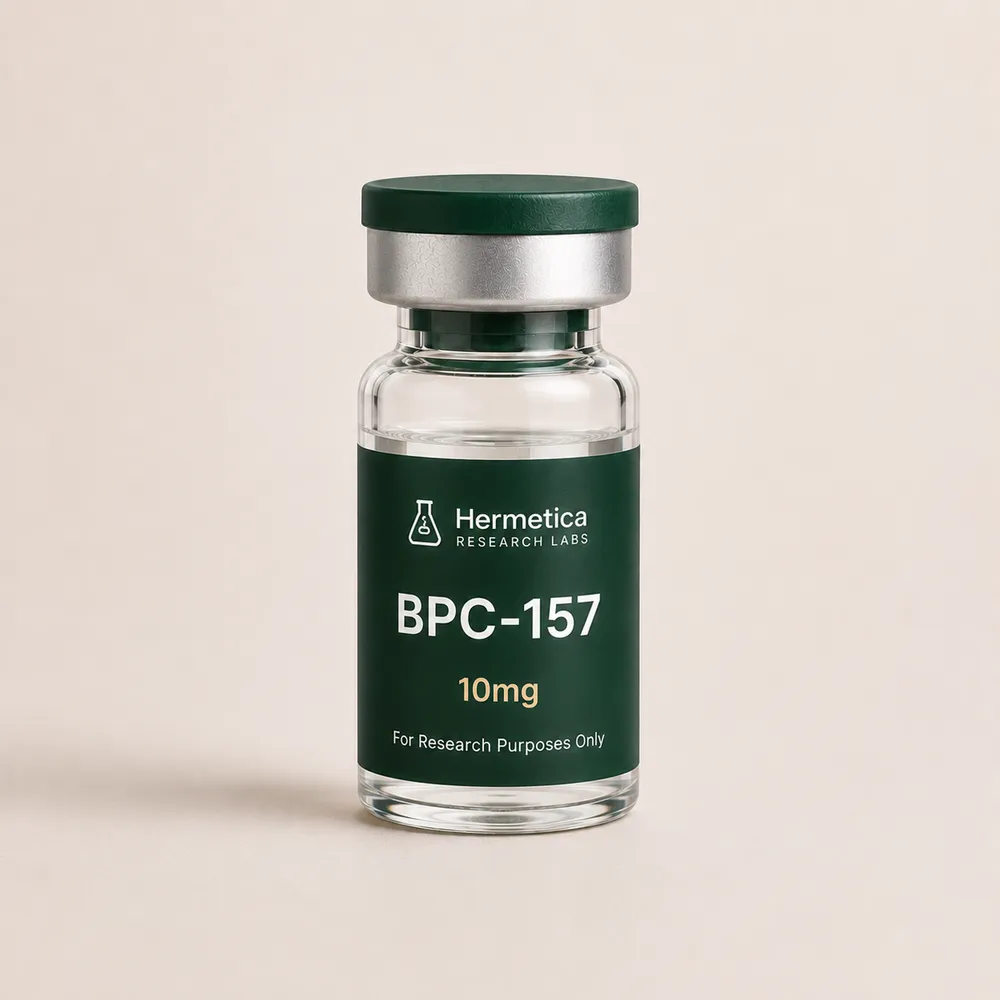
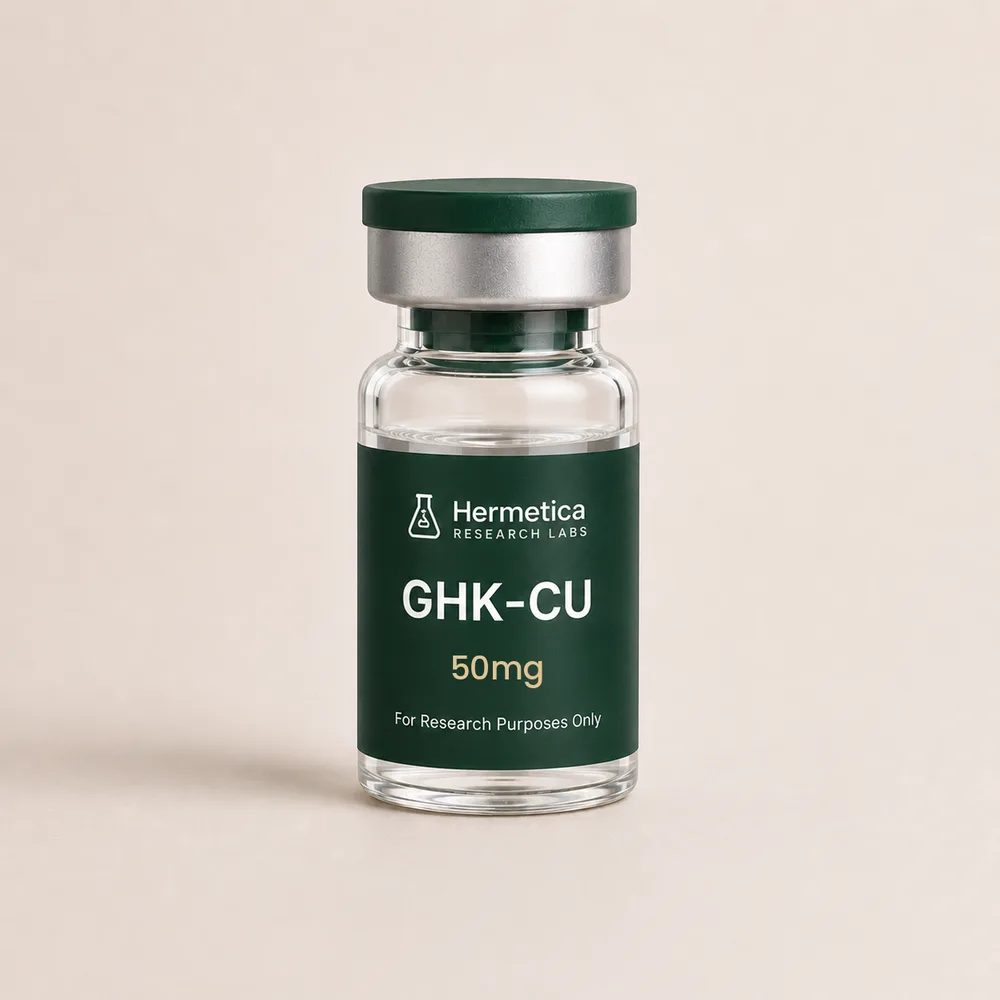
Hermetica Research Labs publishes the third-party certificates associated with each production lot on our COA page, including reports issued by Janoshik Analytical and Freedom Diagnostics, so that the lot number on a vial can be matched to a specific document rather than to a generic quality claim. This applies across the catalogue — including BPC-157 10mg, GHK-Cu 50mg, and Retatrutide 10mg.
We would encourage researchers to verify those documents at the issuing laboratory rather than take our word for them. A supplier that objects to independent verification of its own paperwork has told you something useful.
Research use only. All materials described here are supplied strictly for in-vitro laboratory research and analytical use. They are not drugs, foods, cosmetics, or medical devices, are not approved by Health Canada for any therapeutic purpose, and are not intended for human or veterinary consumption or administration. Nothing in this article constitutes medical, clinical, or regulatory advice.
The Janoshik reports referenced here are published in full, with test numbers and batch identifiers intact, in the COA library. Lot-matched documentation sits on each product page, including BPC-157, TB-500 and MOTS-c.
All content is provided for informational purposes for qualified researchers working with research materials in a laboratory setting. Products supplied by Hermetica Research Labs are sold strictly for in-vitro research. They are not intended for human or veterinary use, and nothing on this page constitutes medical, health, or dosing guidance. Must be 21+ to purchase.
Order RUO research materials
Flat $15 shipping across Canada · Free on orders of $150 or more · Canada only · 21+ · Research Use Only, not for human or veterinary use.
Related research peptides
Related research
- Janoshik COA — peptide lab checklist (RUO)
Checklist for reading Janoshik third-party peptide COAs: lot match, HPLC, LC-MS, accession.
- How to Vet a Research Peptide Supplier in Canada
Catalogue claims across the Canadian market are close to interchangeable, which makes them useless for comparison. This guide covers the checks that produce a verifiable answer — batch-specific analytical reports, lot traceability, and where inventory physically sits.
- Third-party tested peptides in Canada — documentation meaning
What third-party testing establishes on a Canadian research peptide certificate — and what it does not.