What Does 99% Purity Mean on a Peptide COA?
A 99% pure peptide is not a vial that is 99% peptide. This guide separates chromatographic purity from net peptide content, and explains what an HPLC area-percent figure can and cannot tell a researcher.
Nearly every research peptide listing carries a purity figure, and the figure is nearly always 98% or 99%. So what does 99% purity mean on a peptide COA? It means something considerably narrower than most buyers assume. The number is a chromatographic ratio describing the relative composition of the detectable organic material in a sample. It is not a statement that 99% of the powder in the vial is peptide, and treating it as one is the most common misreading of an otherwise legitimate analytical report.
This article separates the two ideas that the single word "purity" is doing double duty for: chromatographic purity and net peptide content.
The number is a ratio, not a mass fraction
Reported purity on a peptide certificate of analysis almost always comes from reversed-phase HPLC with UV detection. The instrument separates the sample into peaks, integrates the area under each one, and expresses the main peak as a percentage of total integrated area. That is the 99%.
Two properties follow directly from how the measurement is constructed.
It is relative. Area-percent compares the target peptide against the other peaks the detector registered. It carries no information about absolute quantity. A vial can report 99.2% purity and contain less material than its label states — purity and fill weight are independent measurements answering independent questions.
It is detector-limited. A UV detector at 214 nm or 220 nm responds to peptide bonds and aromatic residues. Species that absorb weakly or not at all at that wavelength are underrepresented in the peak areas or absent from them entirely. Water, inorganic salts, and residual counter-ions fall into this category. They are physically present in the vial and largely invisible to the measurement that produced the 99%.
The consequence is that HPLC area-percent describes the quality of the peptide fraction, not the composition of the vial.
What else is in a lyophilised vial
A freeze-dried peptide is not a single-component solid. The table below sets out the usual constituents and whether a standard HPLC-UV run accounts for them.
| Component | Typical origin | Visible to HPLC-UV area-%? |
|---|---|---|
| Target peptide | Synthesis | Yes — the main peak |
| Truncated and deletion sequences | Incomplete coupling during synthesis | Yes — related-substance peaks |
| Residual TFA or acetate counter-ions | Cleavage and purification steps | Largely no |
| Residual water | Incomplete lyophilisation, atmospheric uptake | No |
| Inorganic salts | Buffer carryover | No |
For peptides supplied as trifluoroacetate salts, counter-ion mass alone can account for a meaningful fraction of the powder weight, with the exact figure depending on sequence length and basic residue count. Residual moisture adds further mass. Neither shows up in an area-percent purity figure.
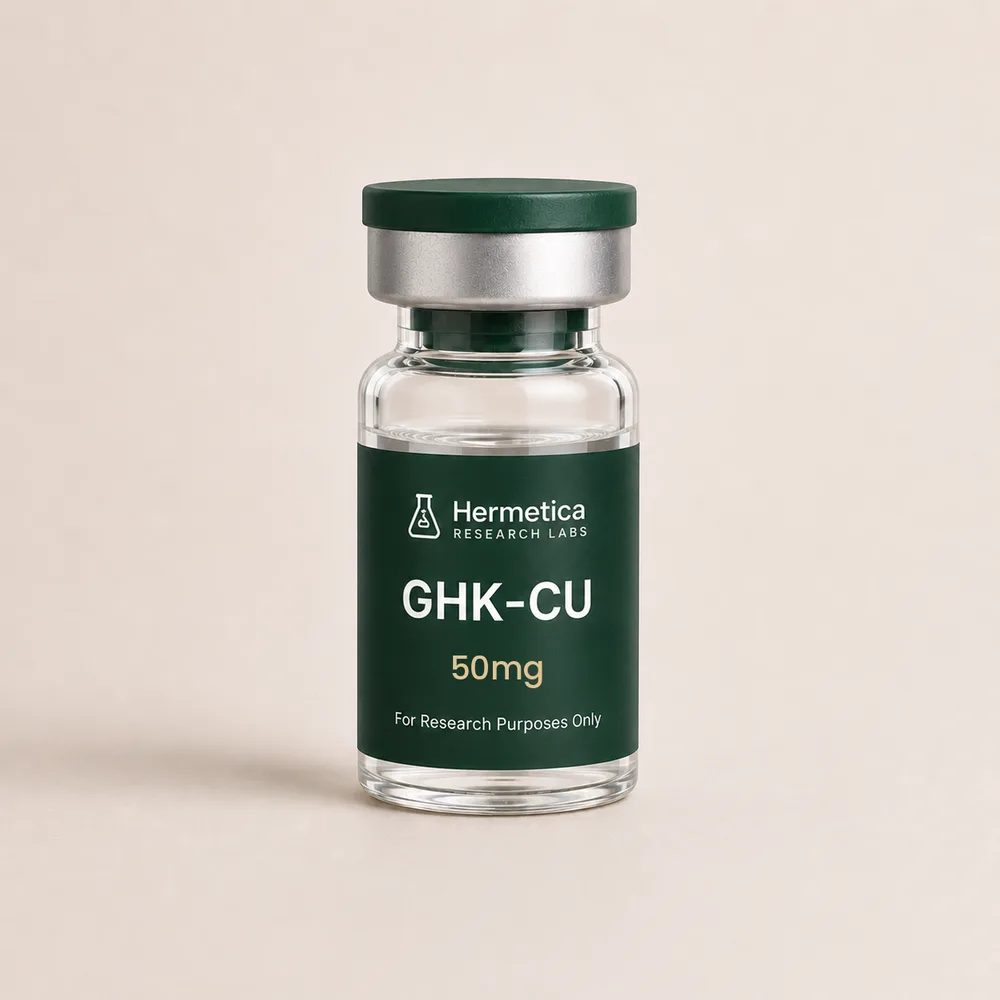
Metal-complexed compounds make the distinction especially visible. A copper-bound tripeptide such as GHK-Cu has a defined stoichiometric metal component that is part of the compound's identity rather than an impurity — a reminder that "what is in the vial" and "what counts as the target species" are questions requiring the chemistry, not just the percentage.
What 99% purity means on a peptide COA — and what it does not
Read strictly, a 99% figure supports a narrow, useful claim: of the UV-absorbing material the chromatographic method resolved, roughly 99% eluted as a single peak, and about 1% was distributed across related substances. Combined with a mass spectrometry result confirming the observed mass matches the theoretical mass for the sequence, that becomes strong evidence of both identity and chromatographic cleanliness. Purity without an accompanying MS identity confirmation is a much weaker claim — a clean peak of the wrong molecule is still a clean peak.
What the figure does not support: any inference about how many milligrams of peptide the vial holds.
Net peptide content: the measurement that answers the mass question
Net peptide content — sometimes called peptide content or assay — is the separate determination of what proportion of the lyophilised powder is peptide by mass. It is conventionally established by quantitative amino acid analysis (AAA), in which the sample is hydrolysed and the liberated amino acids quantified against calibrated standards, or by nitrogen determination.
For a typical TFA-salt peptide reporting 99% chromatographic purity, net peptide content is characteristically lower, because the counter-ion and residual water contribute mass without contributing peak area. The two numbers are not in conflict. They measure different things.
Net peptide content is reported far less often than HPLC purity, largely because AAA is a separate, slower, and more expensive assay than a chromatographic run. Its absence from a report is not by itself a red flag. Presenting a chromatographic purity figure as though it settles the mass question is.
Practical questions for evaluating a purity claim
- Does the report name the analytical method, column, wavelength, and gradient, or does it state a bare percentage?
- Was it issued by an independent laboratory, and can it be verified against that laboratory's own records?
- Is the purity figure tied to a specific lot number that matches the vial in hand?
- Does an MS result accompany the purity figure and confirm the expected mass?
- Is purity being described in language that implies mass content when the underlying measurement is area-percent?
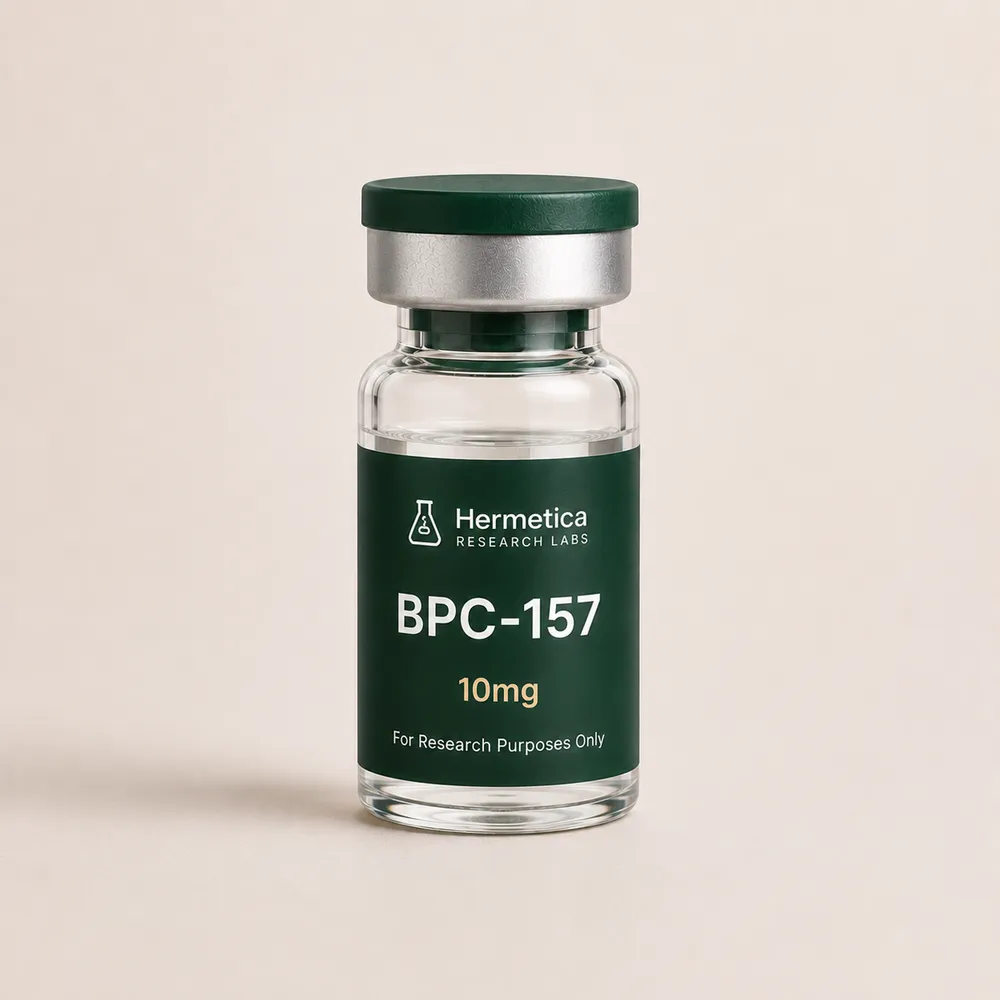
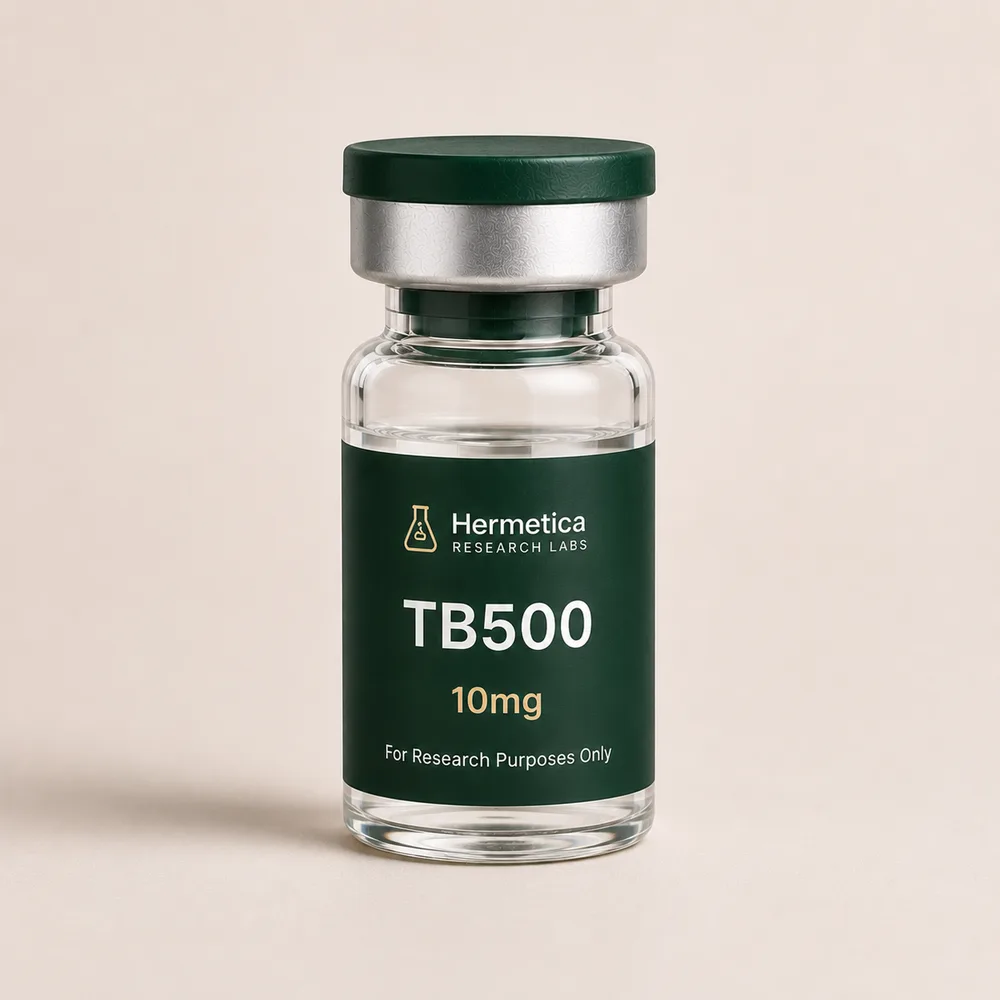
Hermetica Research Labs publishes the batch-level third-party reports behind its listings on the certificate of analysis page, with lot numbers traceable to individual products such as BPC-157 10mg and TB-500 10mg. Reports are issued by Janoshik Analytical and Freedom Diagnostics and can be checked against the issuing laboratory rather than taken on our word.
The short answer to the question, then: 99% purity is a well-defined chromatographic statement about relative composition, valuable when the method is disclosed and the identity independently confirmed, and silent on the quantity of peptide present. Read it for what it measures.
All products supplied by Hermetica Research Labs are intended strictly for laboratory research use only. They are not drugs, foods, cosmetics, or medical devices, and are not approved by Health Canada for the diagnosis, treatment, cure, or prevention of any condition. They are not for human or veterinary consumption or administration, and are to be handled exclusively by qualified professionals in an appropriate research setting. This article is provided for informational and educational purposes concerning analytical chemistry and laboratory practice, and does not constitute guidance on the use of any compound.
All content is provided for informational purposes for qualified researchers working with research materials in a laboratory setting. Products supplied by Hermetica Research Labs are sold strictly for in-vitro research. They are not intended for human or veterinary use, and nothing on this page constitutes medical, health, or dosing guidance. Must be 21+ to purchase.
Order RUO research materials
Flat $15 shipping across Canada · Free on orders of $150 or more · Canada only · 21+ · Research Use Only, not for human or veterinary use.
Related research peptides
Related research
- HPLC purity on a peptide COA — Canadian lab notes
What HPLC purity means on a Canadian research peptide Certificate of Analysis versus net peptide content. Research Use Only.
- Third-party tested peptides in Canada — documentation meaning
What third-party testing establishes on a Canadian research peptide certificate — and what it does not.
- Third-Party Tested Peptides: What the Claim Actually Means
"Third-party tested" is not a defined term, and the same phrase covers arrangements with very different evidential value. This guide sets out the four fields that make a peptide COA checkable, and the order in which to read them.